OYOBID
UX/UI Design for a Dual-Sided Bidding Platform
UX/UI design for a dual-sided bidding platform focused on simplifying complex user flows through structured systems and scalable interfaces.
Platform Design
Designing for Two Distinct User Groups
OYOBID was designed as a dual-sided platform similar to marketplaces like Airbnb, where different user groups interact through separate but interconnected workflows.
The platform required distinct experiences for buyers and sellers, each with different goals, actions, and communication needs throughout the bidding process.
UX Research
Structuring Complex User Flows
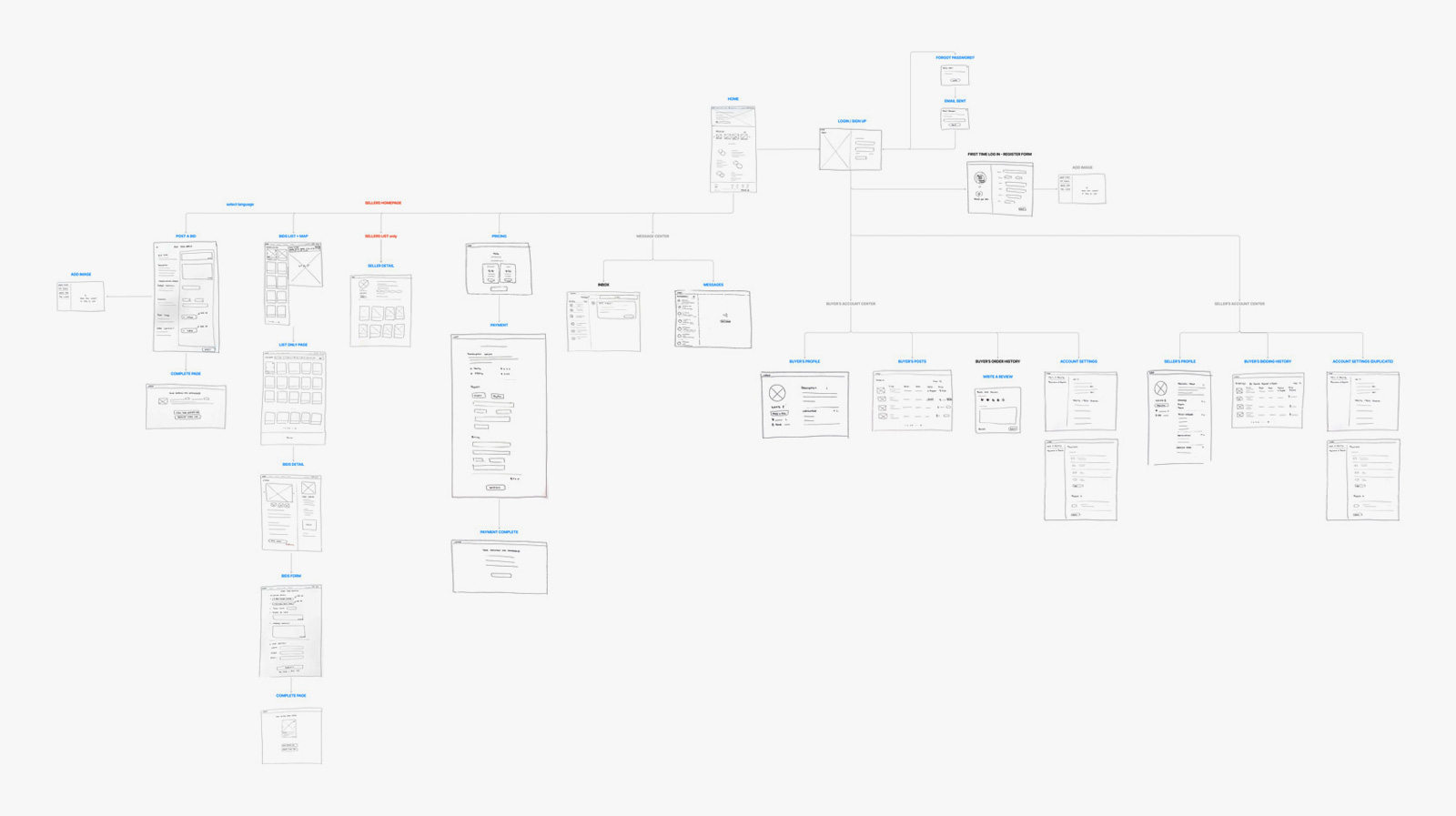
The project began with detailed user persona development and workflow mapping to better understand user motivations, platform behaviors, and interaction pain points across both sides of the marketplace.
Site maps and user flows were then created to organize complex platform functionality into clearer and more intuitive journeys.
Design System
Aligning Early Through Design Systems
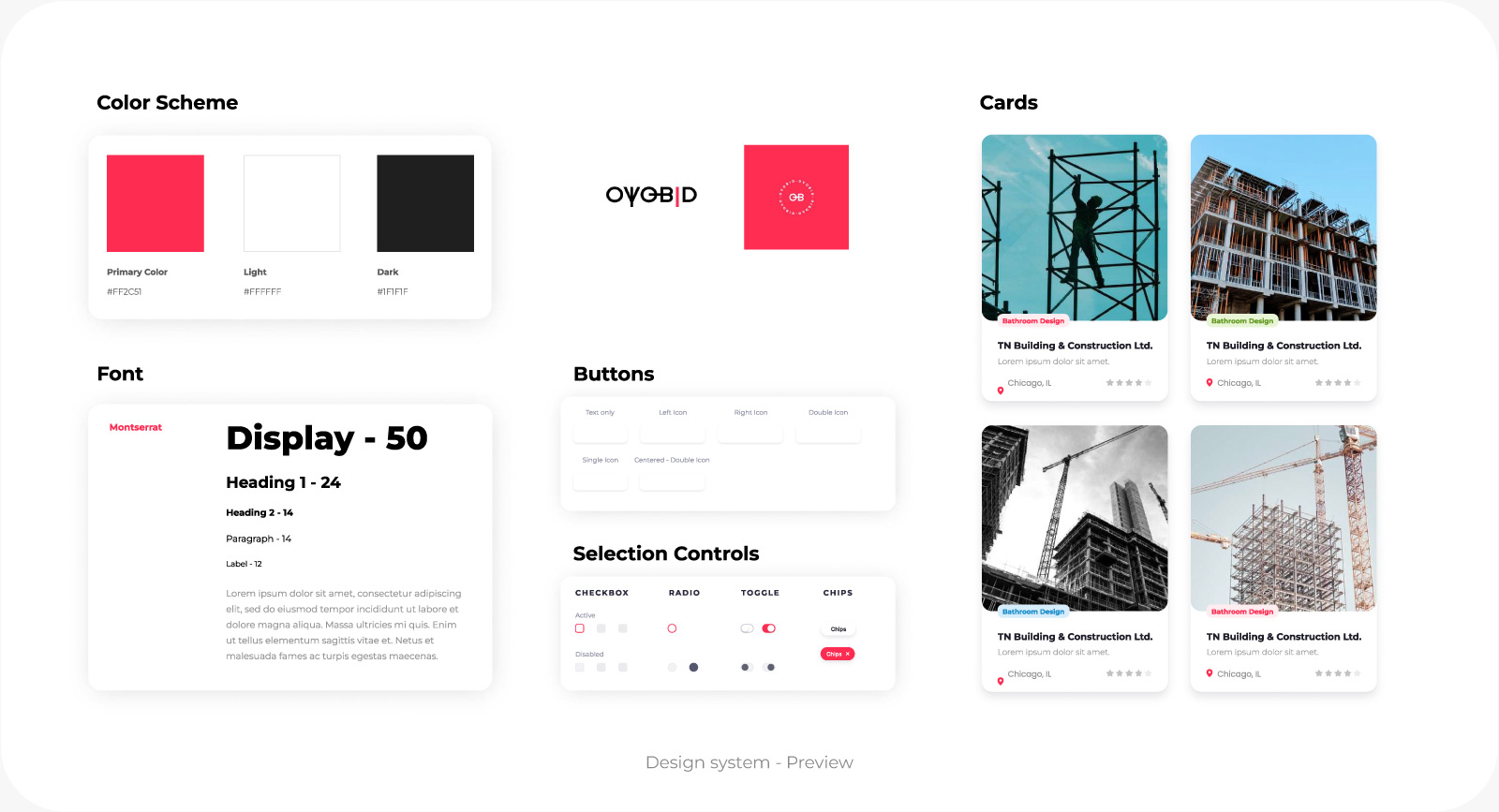
Before moving into high-fidelity design, a UI system preview was developed to establish visual direction, interaction patterns, and component consistency early in the process.
This helped streamline stakeholder communication, reduce unnecessary revisions, and create stronger alignment before wireframes and prototypes were finalized.
Interface Design
Simplifying the Bidding Experience
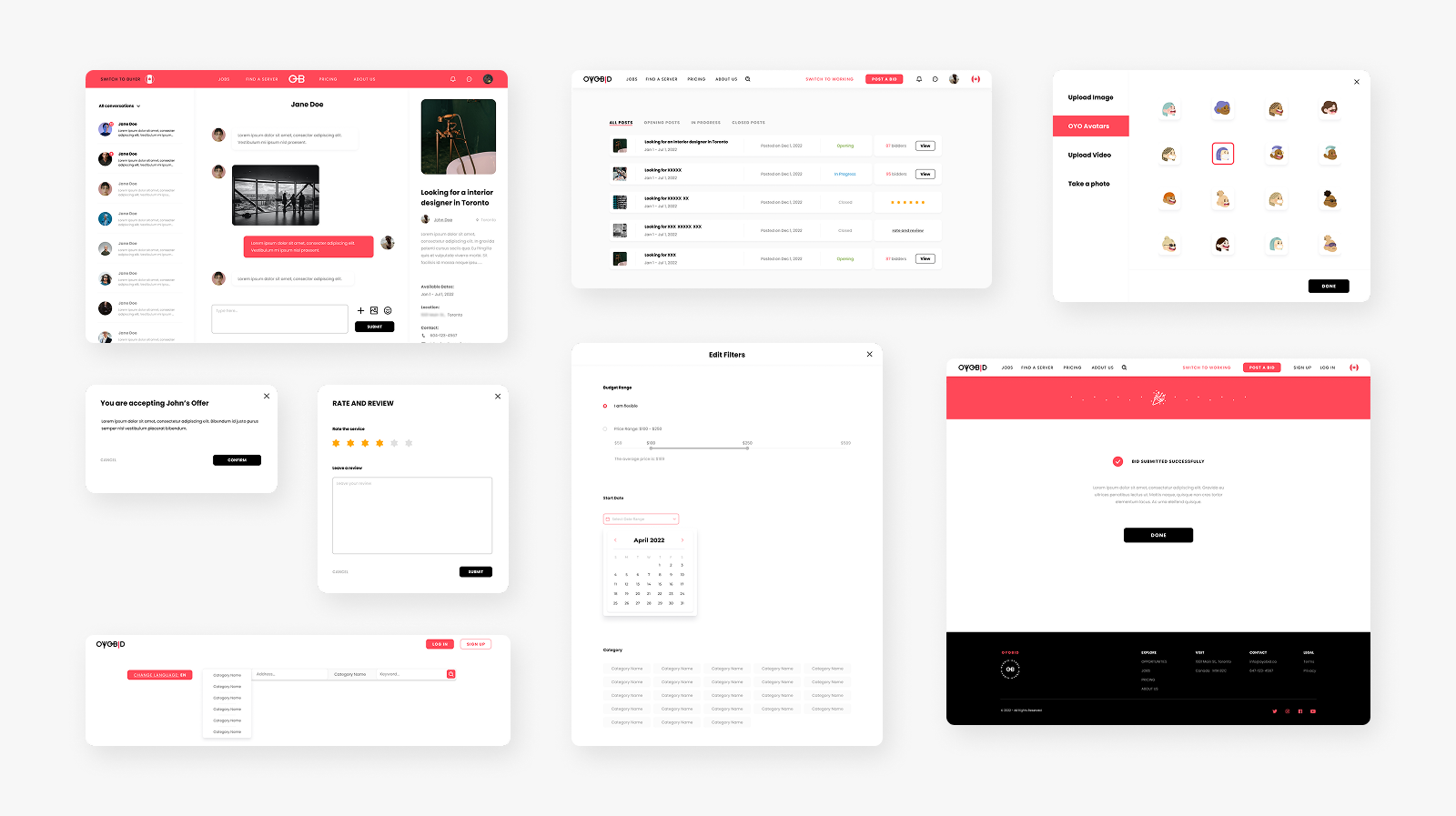
The interface was designed to simplify a complex bidding workflow through clearer hierarchy, structured actions, and streamlined communication between users.
Special attention was given to reducing cognitive load across dashboards, messaging flows, and bidding interactions while maintaining consistency across both user experiences.
Prototyping
Prototyping User Interactions
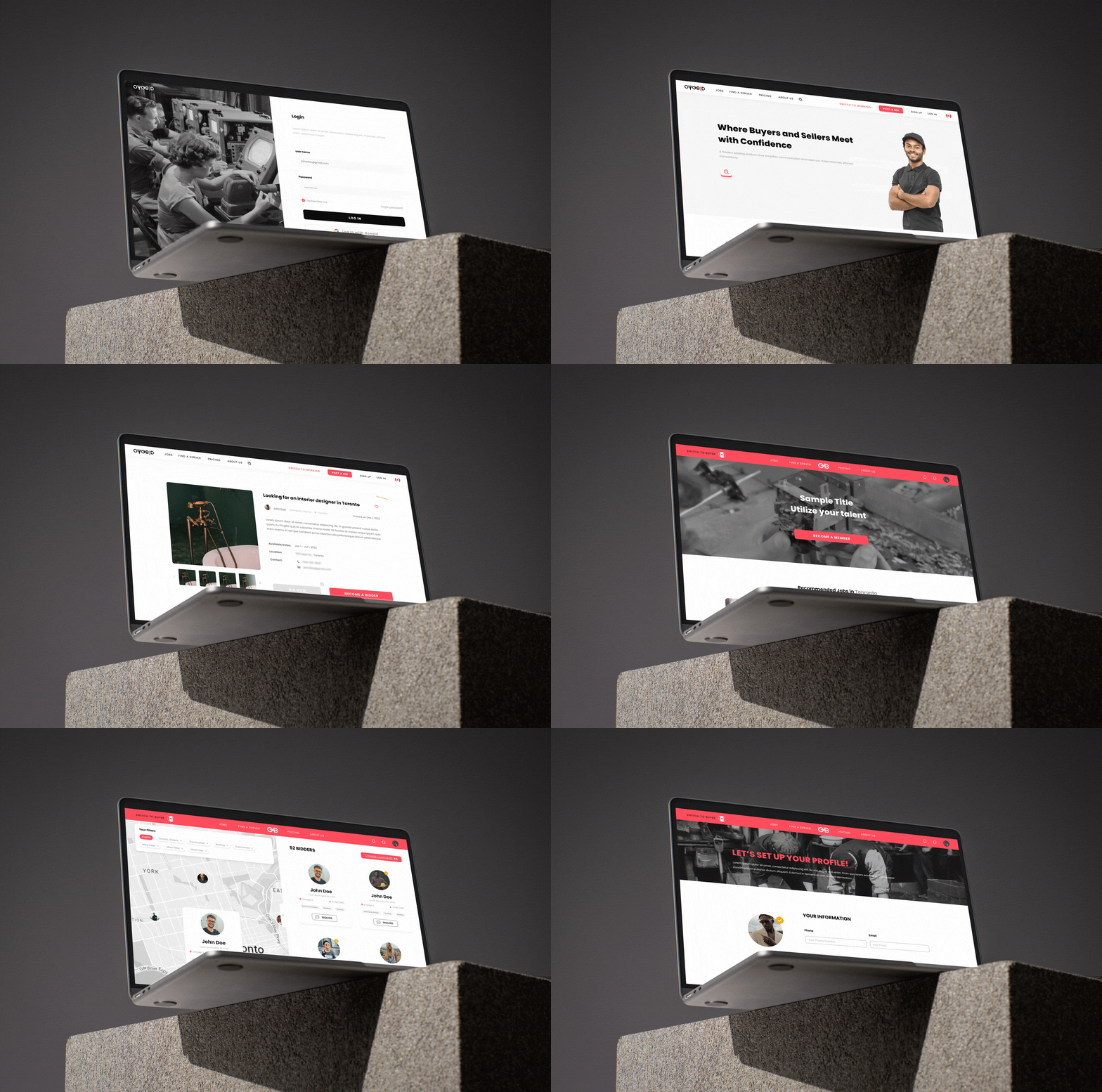
Interactive prototypes were developed to test navigation flow, communication patterns, and platform usability across multiple user scenarios before development.
The prototyping process helped refine interaction details and improve clarity throughout the user journey.
Outcome
The project established a scalable UX/UI framework for a complex dual-sided platform by simplifying communication workflows, improving task clarity, and creating a more structured user experience across multiple interaction points.
More Work